- Knowledge
AI is rapidly redefining creative industries and disciplines.
It is not only changing how people work, but also how culture is produced and consumed. In music, design, film and publishing, the shift from human-led production to human-machine co-creation is happening at speed, driving change and challenging long-held assumptions and approaches.
This shift is also profoundly affecting the world of fine art. Reshaping how art is
created, authenticated, valued and experienced, AI is causing people to reassess creativity,
authorship and the role of the artist. In fact, our very understanding of what constitutes fine art is being turned upside down by rapidly evolving AI systems and programmes.
And the major dilemma – perhaps even existential threat – facing artists today is this: what
happens if AI begins to generate art that is wholly indistinguishable from human artistic
endeavour?
Is AI-generated imagery really art? The tension between authenticity and automation
Authentic art has always been rooted in human decisions, lived experience, and individual
perspective. Every brushstroke, compositional choice, or conceptual leap carries the imprint
of a person: their influences, imperfections, contradictions, and emotional history. This is
what gives artwork its credibility. It is not only what we see on the surface that matters, but
the thought behind it: the story an artist is trying to tell.
AI image generation undermines these foundations by offering something radically different:
quick, effortless, high-quality imagery produced in seconds. With tools like DALL·E and
similar systems, anyone can generate hyper-realistic visuals from a simple prompt. These
models can replicate styles, mimic compositions, and reproduce aesthetic signatures with
astonishing accuracy; all without the years of blood, sweat, and tears, the often tough
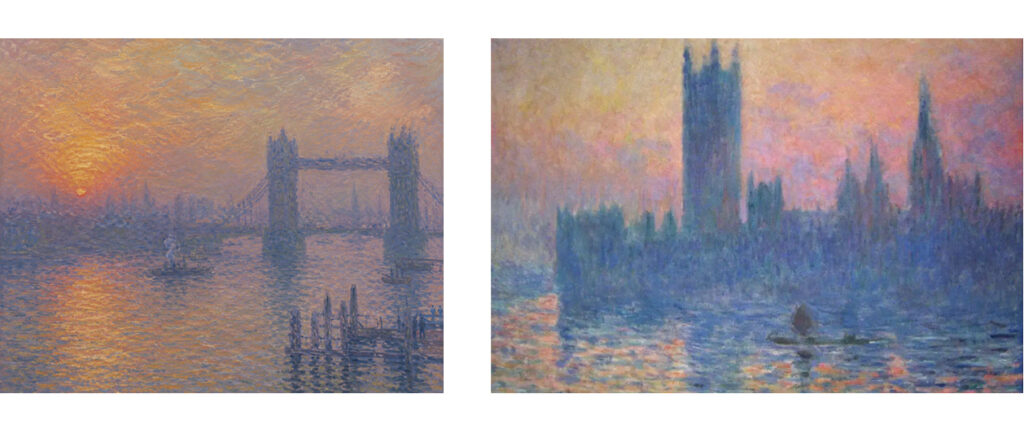
personal journeys that traditionally shape an artist’s work. Claude Monet, The Houses of Parliament, Sunset, 1903. AI-generated image using DALL·E. But this speed and ease come at a cost.
AI systems create images by analysing vast datasets of existing material, not by drawing on
experience or insight. They interpret patterns; they do not feel or reflect. This raises two
intertwined concerns. First, the potential for conceptual emptiness: AI-generated images may
look polished, but they often lack the deeper artistic ambition or intention that gives
human-made work its resonance. They can be visually impressive yet conceptually hollow;
easy on the eye but disconnected from any authentic narrative.
Second, the ethical and legal risk: because AI models learn from existing artworks,
sometimes without consent, they can inadvertently reproduce or remix copyrighted material.
This blurs the line between inspiration and appropriation, and raises legitimate questions
about whose work is being echoed, borrowed or even ripped off in the process.
Opening new pathways or restricting opportunities?
For individuals and businesses seeking fast, low cost visuals, AI is undeniably attractive. It
can generate an artistic flourish in an instant; a piece of visual branding in seconds; content
in the blink of an eye. But what it cannot reproduce is the intentionality, vulnerability and
originality that define art as a human process and give fine art its true value.
This leads to the central question: can imagery generated artificially truly be considered art?
Or is it something else entirely? A powerful tool, a new medium? Perhaps even a new
aesthetic category? But can it ever be a substitute for the creative act itself?
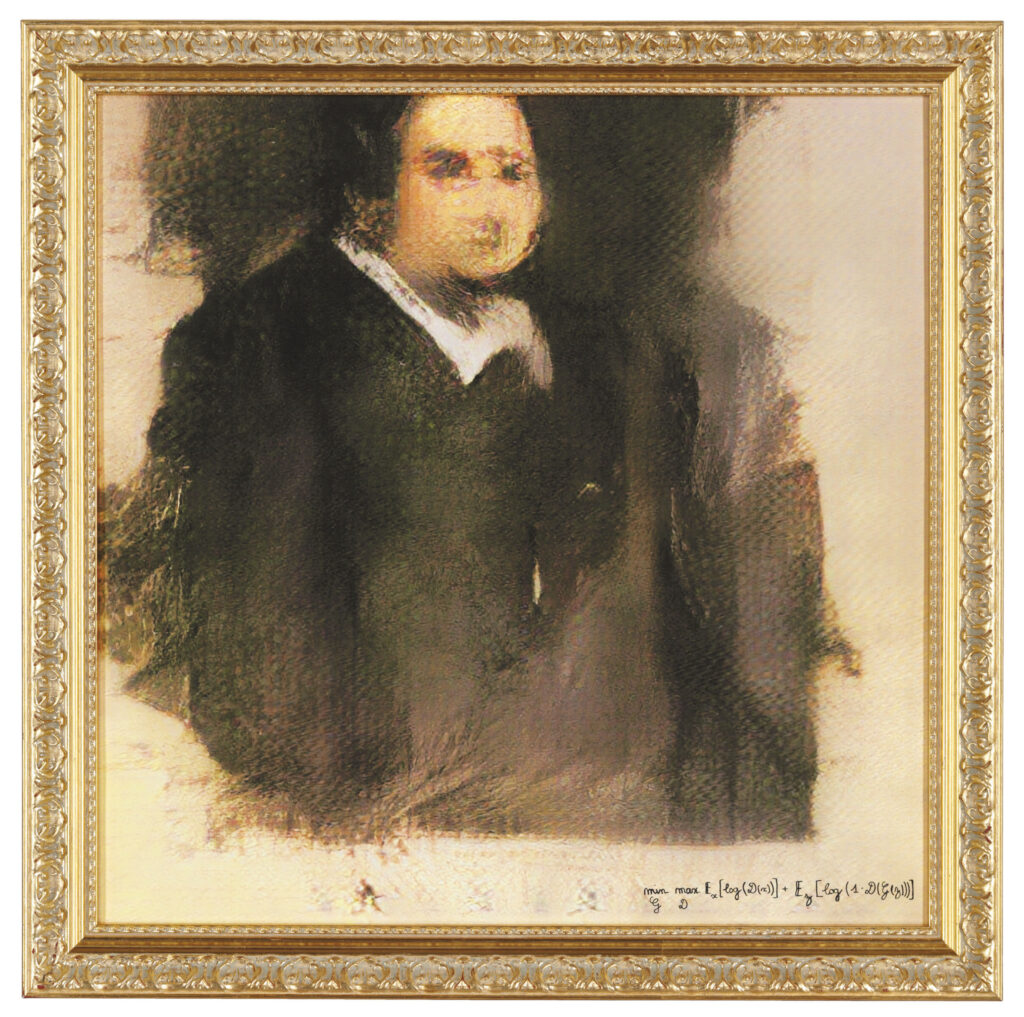
In 2018 Artist collective Obvious created a series called La Famille de Belamy which
addresses these questions head on. In the series, Obvious captures an imagined aristocratic
lineage, created using Generative Adversarial Networks (GANs) trained on 15,000 classical
portraits. As Obvious explain, “each portrait blurs the line between human tradition and
machine interpretation, evoking the conventions of classical painting while revealing subtle distortions.”
As a project and a concept, La Famille de Belamy “challenges our perceptions of authorship,
beauty and the role of algorithms in cultural memory”. The images themselves are visually
striking and wholly unique. Some commentators suggest they should be considered art in
their own right – not just because of their aesthetic impact, but because they have been
conceptually created to subvert our understanding of art and artistic processes. Others,
meanwhile, are less convinced, pointing to the fact that such projects can restrict
opportunities for young artists, making it harder for emerging talent to be seen. Some also
suggest that spaces filled with digitally conceived art lack the character and culture of
spaces adorned with traditionally produced work, devaluing the process of artistic curation.
AI as collaborative creative tool
AI art is often dismissed as the product of a few typed prompts: fast, frictionless, and low-
value imagery that floods social feeds without depth or meaning. And indeed, much of what
circulates publicly is decorative output generated without authorship or artistic inquiry. But
this narrow view obscures a more significant truth. When used deliberately and judiciously,
AI opens up new possibilities within the world of art, reshaping it both visually and
conceptually.
Artists who approach AI as a medium rather than a shortcut are discovering that it can
extend, rather than replace, human expression. It becomes a tool for pushing boundaries,
translating data into visual form and producing responsive or evolving artworks. It enables
the artist to explore themes of technology and authorship, or generate dynamic moving
image pieces that shift in real time. In these contexts, AI is not a generator of images, but an
experimental collaborator and cocreator.
This is not the first time the art world has confronted a new tool that disrupts established
norms. Human expression has always evolved alongside technological change. From
prehistoric cave paintings (the moment humans moved from survival to symbolic expression)
to traditional painting, to the invention of photography in the 1800s, to digital art, nonfungible tokens (NFTs) and screen-based media, new methods and materials have
expanded possibilities and redefined what constitutes ‘art’.
Indeed, photography itself was once rejected as a legitimate art form. Today, it is a
foundational medium whose place within contemporary culture is irrefutable. AI represents
AI-human collaboration in action
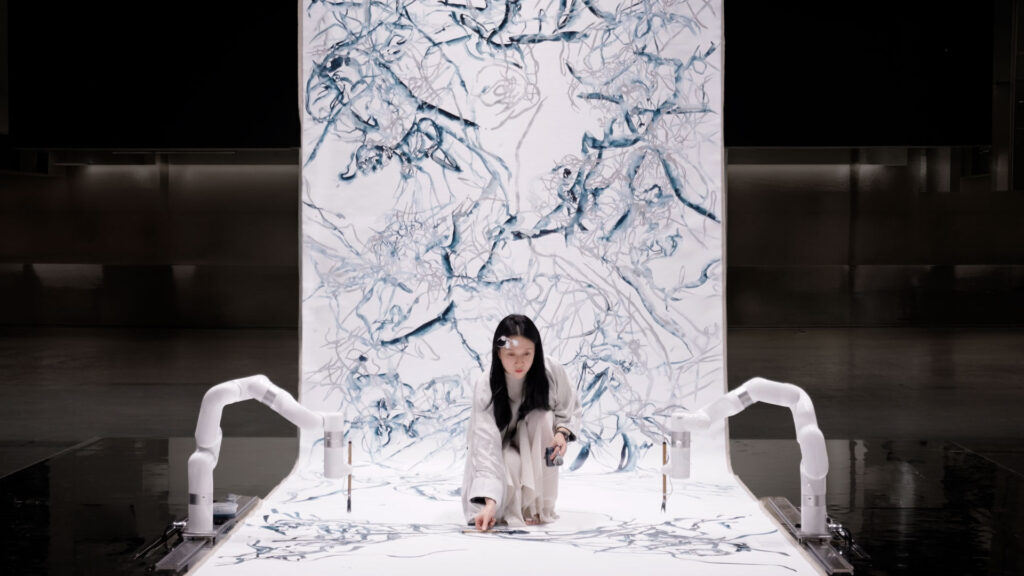
Artists like Sougwen Chung exemplify the shift towards human and AI co-creation. In her
recent body of work, Chung explores the future of human-machine interaction within natural
ecosystems. By connecting her own biometrics to self-built, programmed drawing machines,
she allows AI to respond to the rhythms and electrical activity of her body. The resulting
works blend human and machine capabilities; they are hybrid expressions that reveal new
forms of cocreation. Chung’s practice demonstrates how AI, when used with intention, can
deepen rather than dilute artistic authorship. Her work is evidence that AI does not have to
replace the human artist. Instead, it can expand the field of what’s possible, offering new
materials, shaping new behaviours and opening up new conceptual landscapes.
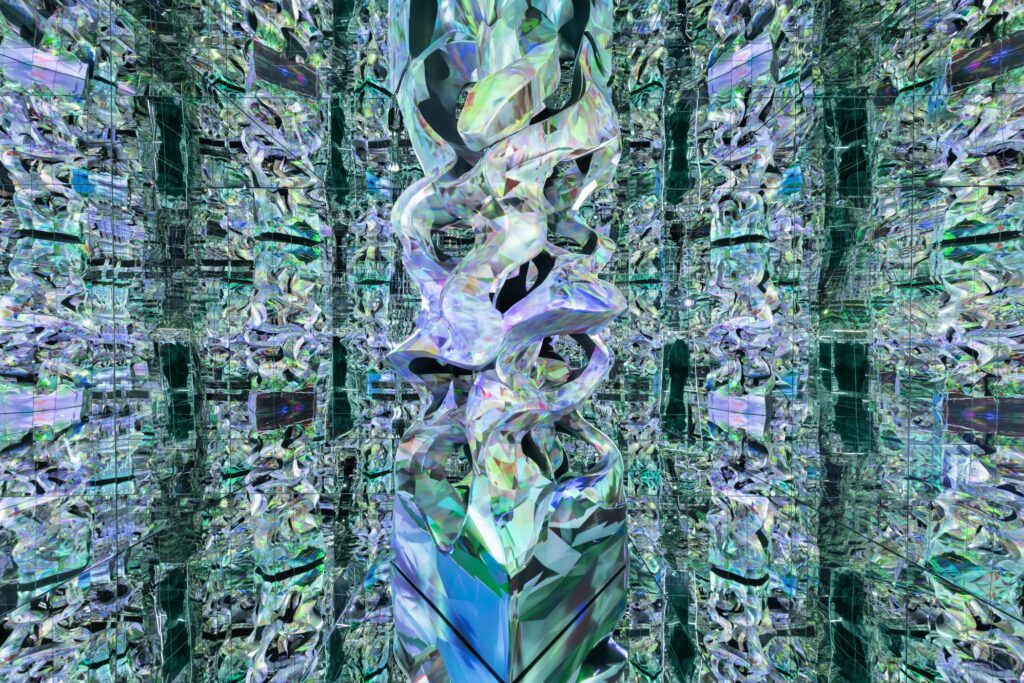
Similarly, the Infinito: AI Data Sculpture, commissioned by Italian fashion house Bulgari and
created by media artist Refik Anadol, presents a “mesmerizing and intellectually evocative
fusion of art and machine learning technologies”. The sculpture itself is a three-dimensional
piece that “celebrates the relationship between nature’s inherent beauty and the unbounded capabilities of artificial intelligence”. It is created from the vast data pools of Large Language
Models, fined-tuned specifically on snakes. Anadol and his team have transformed this data
using advanced machine learning algorithms, which mould the data into sculptural form.
The piece also has thematic relevance, with the sculpture reflecting the process by which
Bulgari transforms raw materials into iconic pieces of jewellery, watches and other
accessories.
Return to authenticity: the re-emergence of human-made art
As AI-generated imagery floods the cultural landscape, a countermovement is gathering
force: a renewed hunger for authentic, human-made art. The more digital life accelerates, the
more people seem to reach back toward the tactile, the imperfect and the unmistakably
human. Just as recent revivals of analogue technology (brick phones, vinyl records) have
signalled a rejection of pervasive digitalisation, the world of visual art has also experienced
shifts in preference towards traditional artistic methods and forms of expression.
And the logic behind this shift is clear. When originality becomes scarce, when visual culture
feels oversaturated with algorithmic imagery, the value of human creation increases.
Collectors and audiences alike are gravitating toward artworks that carry the marks of physical labour: texture, colour, depth, material presence. These qualities cannot be replicated by a prompt; they must be made.
At the same time, the sheer volume of digital content has created a kind of visual fatigue. In
a world where images can be generated instantly and infinitely, tangible art offers resistance.
Refik Anadol, Infinito – AI Data Sculpture. It slows the viewer down. It asserts its own singularity. It reminds us that creativity is not just output but process – a process shaped by emotion, memory and lived experience.
This return to authenticity is not nostalgia but recalibration. As the boundaries between
human and machine-made imagery blur, people are choosing to invest in what feels
grounded and real. The physical artwork becomes not just an object, but a statement: a
commitment to originality in an age of replication.
Spacial Artworks and AI
At Spatial Artworks, we believe that art should always begin with the artist. We believe that
in instances where low-value AI is restricting opportunities for artists and reducing the quality
and character of curated spaces, its overall cultural impact is detrimental. And we call on
members of the artistic community to resist and reject AI when used purely to replicate or
generate visual images without creative or conceptual intention, curiosity or integrity.
However, we also believe that when AI is used to push creative boundaries, explore visual
possibilities and challenge or create conceptual frameworks, those artists utilising this new
medium should be commended, not dismissed.
As an enabling, co-creative tool, AI holds hugely exciting possibilities for visual art; but artists, not algorithms, must lie at the heart of these new creative endeavours.
Brave new world
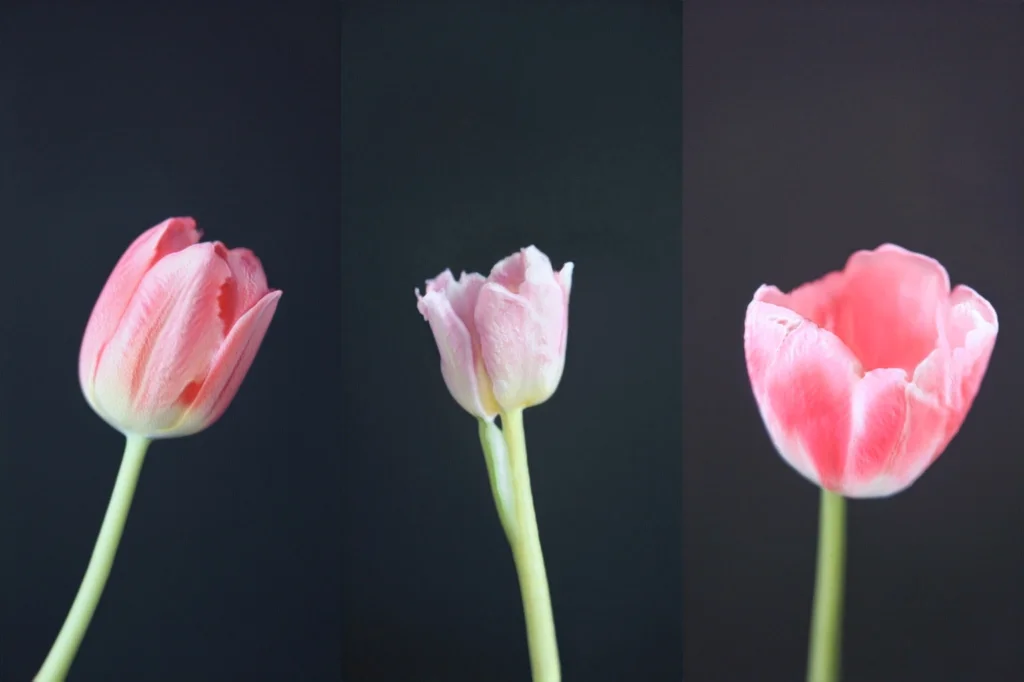
AI is undeniably reshaping the art world, accelerating production, enabling new digital and immersive formats, and expanding what we consider visual media. The future it opens up is full of possibilities that previous generations could not have Anna Ridler, Mosaic Virus, 2018 imagined. Yet this transformation also exposes a clear divide. Opinions are polarised, and the tension between technological innovation and artistic authenticity has never been sharper.
At its core, AI cannot replicate the qualities that define human artistic practice. Perspective,
meaning and originality are not features that can be automated; they are lived, felt and real.
And yet, when AI is used as a tool rather than a substitute, it becomes a catalyst for dynamic
change. It reframes the relationship between technology and expression, and paradoxically
heightens our appreciation for physical, human-made work.
The future of AI in the art world is both unsettling and exhilarating. What is clear is that AI is
not replacing art; it is redefining the landscape in which art is made, valued and understood.
But within that shifting terrain, the human artist remains irreplaceable.
Get in touch to learn how we can provide workplace art tailored to your business.